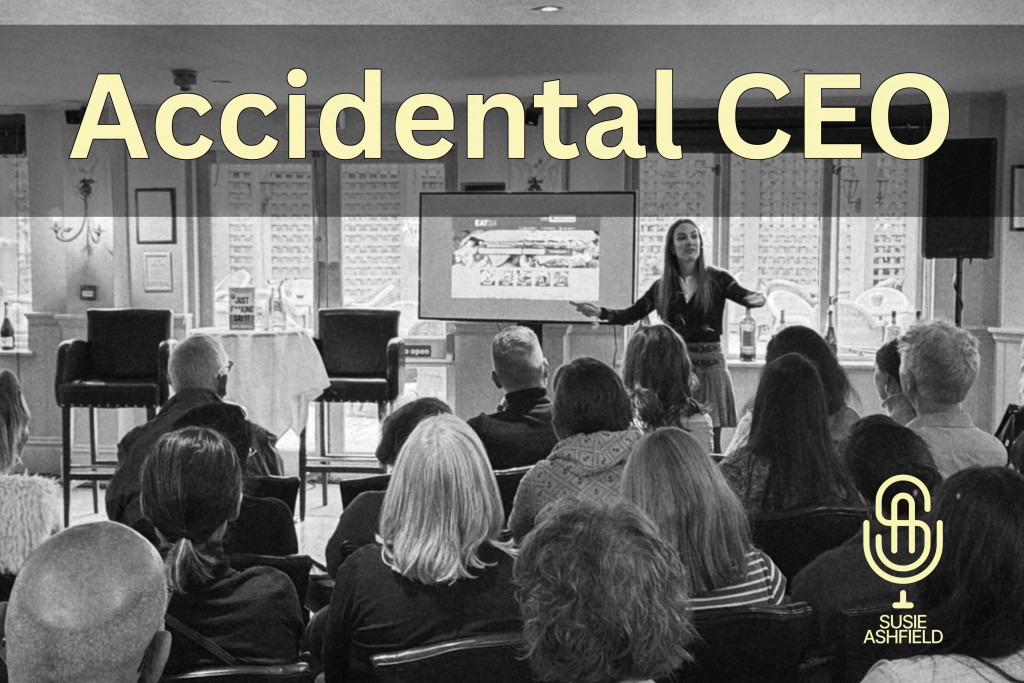
"I didn't even plan on being a CEO, but here I am…"
You'd be amazed how many times I've heard this line. I call this type of client 'the Accidental CEO', because they never set out to be at the top of the chain, but somehow, that's exactly where they've ended up. And as incidental as it may seem, I'm absolutely convinced these two elements are connected. The professional who never saw themselves as the steerer of the ship is frequently the best choice to be behind the helm.
Suddenly, and without any of the media training or one-to-one speech coaching they thought would accompany the role, they've found themselves as the spokesperson, the visionary and the one who it all comes back to. No road map, no blueprint, just huge quantities of responsibility that the Accidental CEO is now heading up and having to figure out in real time.
There's no course for this. Every training provider under the sun promises 'Leadership Skills', but then, so do the Brownies — which is why I assume they so often end up as my client, in lieu of a specific 'How to be a CEO in one short afternoon' workshop.
So What Do We End Up Doing?
The one thing that anyone in a C-Suite position needs to do very well is communicate. Look no further than the true story that best describes the role of a speech coach — the tumultuous romance between the would-be King Edward and his lover Wallis Simpson. A completely unexpected twist of fate that threw the British monarchy into constitutional crisis and landed George VI into a position he never expected he would be in: that of King.
Famously, coaching from the famed actor Lionel Logue improved not only a serious speech impediment but also his confidence, taking him into his role as Head of the Commonwealth not only physically, but mentally.
In 2026, 'The Accidental CEO' faces the same challenge — they need to communicate as though they know what they're doing and where they're going, despite feeling the opposite.
I've seen it come to pass through all kinds of twists of fate — from love affairs, to illness, to a simple change of heart — leaving the powers that be to rapidly find the most suitable body to fill the role effectively and at the shortest possible notice. It's no coincidence that they choose outside of the front runners and opt for someone who isn't expecting it. It means the role is filled without ego, rivalry, or false pretence, but it won't be an easy transition.
They need to sound:
- Authentic, but confident
- Vulnerable, but strong
- Like a 'born leader' — despite the fact that no such thing exists
A small amount of imposter syndrome can be healthy, but too much is fatal. And why does all of this matter? Because the performance of the CEO is directly linked to the share price of the company.
What Does a Leader Sound Like?
Made, not born. The voice of a leader should sound calm, clear and controlled. Garbled, rushed messages give away nerves, and messages that aren't crystal clear mean that important calls to action get missed.
What often happens is that a lack of confidence means public speaking opportunities are full of too much 'stuff', because the speaker has incorrectly assumed that the more content crammed in, the more credible they'll sound.
My one-to-one speech coaching strips it back to just one key message, often through the question:
"If the audience could remember only one single sentence from everything you want to say, what would you want that sentence to be?"
Suddenly, reams of endless copy become one, clear statement that the audience actually engages with.
What Does a Leader Look Like?
The trouble with cramming in as much content as possible is that a speaker then feels they have to race to fit it all in. This results in:
- A messy, breathless, directionless delivery
- Going overtime
- An audience hoping next time you'll just email them
With brevity, you suddenly have space to focus on a delivery that shows vulnerabilities, but clarity. Letting the audience see that you're human isn't a weakness. In fact, it creates the authenticity that allows the audience to really engage with the speaker.
Don't worry about the odd 'umm' or 'err'. If you've gotten that one key message to land, then you've done more than enough.
What Does Leadership Feel Like?
The most important part of how a leader communicates is not in the speaking, but the listening. An old adage, but a truthful one.
Don't feel like a leader has to have all the answers, or infallible confidence. It's the leaders who are willing to hold silence and ask the right questions who attract the most engagement.
The qualities that truly matter:
- Self-doubt — used constructively, not destructively
- Uncertainty — embraced, not hidden
- Willingness to voice concerns out loud — far more valuable than impenetrable armour
In fact, the only two groups of people who are fully confident in their own abilities are toddlers and psychopaths — neither of whom make brilliant CEOs (although you'd be amazed how many of the latter category end up in the 'intentional CEO' role).
There's something powerful in the incidental. Lean into your strengths, understand your own weaknesses, and focus on a North Star — and suddenly you'll realise why the title 'Accidental CEO' wasn't nearly as accidental as you once thought.