The market on Portobello Road in Notting Hill is over 150 years old, and attracts 17 million people in footfall annually. You can still find descendants of families that were there from the start, setting up stalls today.
Despite this, if you stop to speak to some of the traders — and I really suggest you do — they’re not having an easy time of it.
One of my favourite characters sells scented candles in vintage teacups. An attractive product, not overpriced, and many tourists stop at the stall. “Everyone is looking, looking,” he tells me glumly. “No one is buying, buying.”
But they’re all still there every morning. Waiting, and hoping, and chatting away. Sometimes a whole day will pass without a single sale.
Pack away, go home, come back, unpack, start again. In times like these, to not trade is the hardest part of being a trader.
If you’re feeling the struggle right now, I can assure you — you’re not the only one. In times where the market is harder than ever, how do you show your worth without showing off?
Community First, Storytelling Second
The answer lies in two places. Firstly, community. If you become the loudest cheerleader for the success of others, it won’t feel so uncomfortable when you do it for yourself. Once you have established a reputation as the person who celebrates the wins of others, it makes total sense when you turn the spotlight on your own achievements.
When it comes to reminding senior leaders or clients how good you are at what you do, it can often feel like shouting into a void when you try to post about it on social media — or (cough) talk about it in a newsletter. The trick here is storytelling. Instead of saying “I’m really good at this, I’ve been doing it for X number of years, for X amount of people in offices all over the world,” try using a case study instead.
We’re inclined to listen to something that feels like a story with a lesson in it, whereas those who use their platform to justify their credibility have a much harder time of getting people to listen.
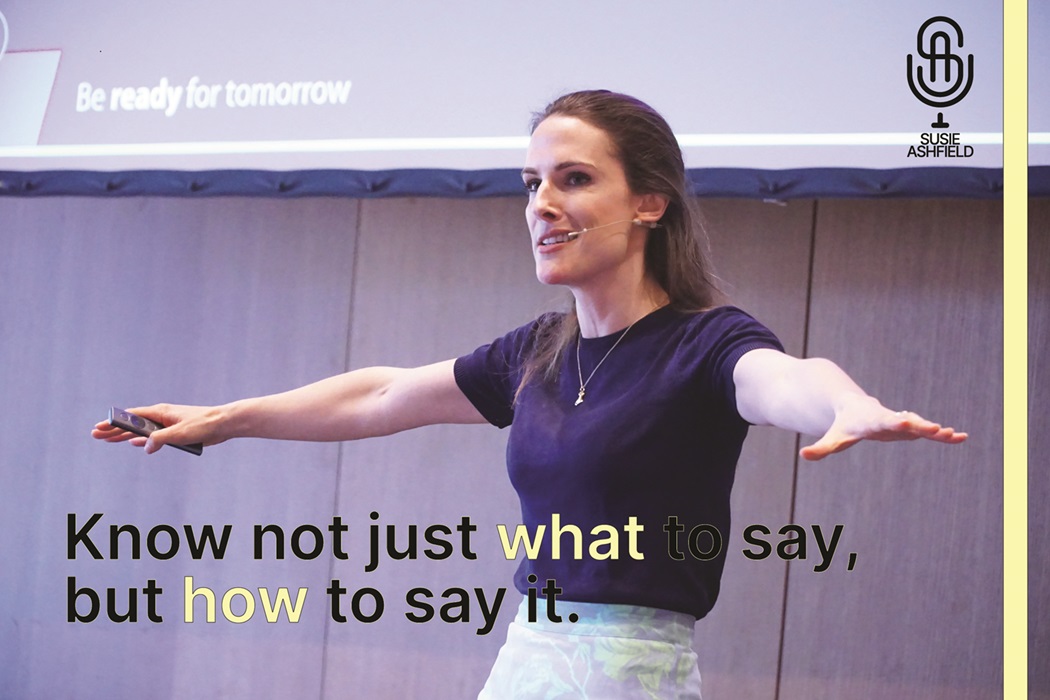
That was the theme of my keynote speech at ‘Women in eComm’ last week, before rushing over to deliver a lunchtime workshop to Little Moons on ‘Self-Promotion without the Ick’. Both rooms were full of professionals who needed to know how they could talk about their work with confidence — so their projects and smashed sales targets could get the recognition they so rightly deserved.
“I know how to tell my clients that they can’t live without me now,” came the feedback from one person in the crowd. Another poignantly noted: “If I can do it comfortably for my colleague, I shouldn’t think twice about doing it for me too!”
Good Storytelling and Brevity Go Hand in Hand
As ever, good public speaking storytelling goes hand in hand with one thing: brevity. You have to be able to talk clearly and concisely to your target audience about what you can do for them, in a language that they understand, if you want to achieve tangible outcomes — and not just adulation.
So what does that look like? Like any good magician, a simple turn of the wrist can transform what might be an ordinary event into something that magically generates interest from a potential client.
The Podcast Announcement: Before & After
Let’s say you’re lucky enough to be featured on a podcast. Here’s how most people might announce it — and why it falls flat every single time:
The typical approach:
“I was delighted and grateful to be featured on the That Property Show podcast last week, and I had a really great time talking about my job role at The Brick Foundation…” etc, etc.
The problem? It’s exactly what everyone else is posting. It offers no real value to the reader, and whilst it might be nicely written, there’s nothing that grabs me — let alone keeps me reading.
Try this instead — audience-first public speaking:
“If you’re worried about why so many homes across the UK are standing empty at the moment, then you need to listen to this…”
- The “I” is replaced with “you” — the focus switches immediately from speaker to audience
- You’ve focused on a common concern — most people don’t read past the first line, so make your first line your best
Anyone experiencing the concern or problem you’re describing is now far more likely to read on.
The typical approach is to sign off showing gratitude and hoping that the right people see what you’ve put out there. There’s nothing wrong with gratitude or acknowledging the other people involved — but if that’s where you finish it, you’ve missed an opportunity.
If you really want to turn it into something that gets noticed, think again about the community angle. By adding tips or practical pointers, you’ve suddenly turned something that could’ve felt boastful into something that not only showcases your executive speech communication and public speaking expertise, but also offers something genuinely useful. For example:
“We covered:”
- Why the biggest barriers are often legal, not physical
- The best names in the business to help you cut through the red tape safely
- Why reviewing your insurance might be the smartest move you can make
- How dismissing a property just because it’s been empty for a while could mean you lose out on a huge opportunity
The Most Powerful Self-Promotion Tool: Case Studies
The last, easiest and most obvious thing you can do is simply to talk about case studies. Whether it’s a recent client you helped, how your product changed everything for one person, or a simple ‘before vs after’ — some of the best pitches I’ve ever heard have barely talked about the product or service, and instead focused on three stories that demonstrate an outcome for a user or potential user.
The teacup candle — credentials vs. story
So instead of writing this:
“This teacup holds 30ml of 100% pure soy wax. The wax is of excellent quality. We have been making teacup candles for over two decades. We sell approximately 50 soy wax candles a week. Our most popular scents are ‘French Lavender’, ‘Amalfi Lemons’ and ‘Strawberry Fields’.”
You get this:
“Last week, we almost lost our biggest client. She’s been shopping with us for years, and she loves picking up the teacups we fill with our secret Lavender blend, because the smell reminds her of her holidays in the South of France with her grandmother. But when she asked us to create 50 candles for her wedding in September, we almost had to cancel the order. Why? Because we hate letting customers down, and we didn’t think we could fulfil her request with such a short deadline — we’d have to do the work that usually takes us 2 months in 3 weeks!
But we were willing to do it, mostly because we love a challenge, but also because we like to go above and beyond for our most loyal customers. So we took on extra helpers, we worked over the weekends, and we found a provider that could source the additional lavender oil we needed to complete the request. On top of that, we were able to use some of the bride’s grandmother’s china — just so that it would feel to her like her granny was, in some way, with her during the day.
Needless to say, she was over the moon, and so many people commented on the beautiful scent that filled the room throughout the day. We also discovered that we were able to take on much bigger orders with just a few business adjustments. Imagine if we’d turned down the opportunity to help out a customer, just because we’re a small business?”
The Golden Rule of Self-Promotion & Public Speaking
‘Case studies’ are just a fancy word for storytelling. Make your audience the protagonist — whether you’re preparing a keynote, a pitch deck, or working with a speech coach on your executive communication style:
Stop telling people what you want to tell them. Start telling people what they want to hear.
Whether you’re preparing for a keynote, a board presentation, or working on your one-to-one speech coaching journey — put your audience at the centre of the story. That’s where the magic of great public speaking and executive speech communication really happens.